
What Your Bumpy Toenails Are Trying to Tell You
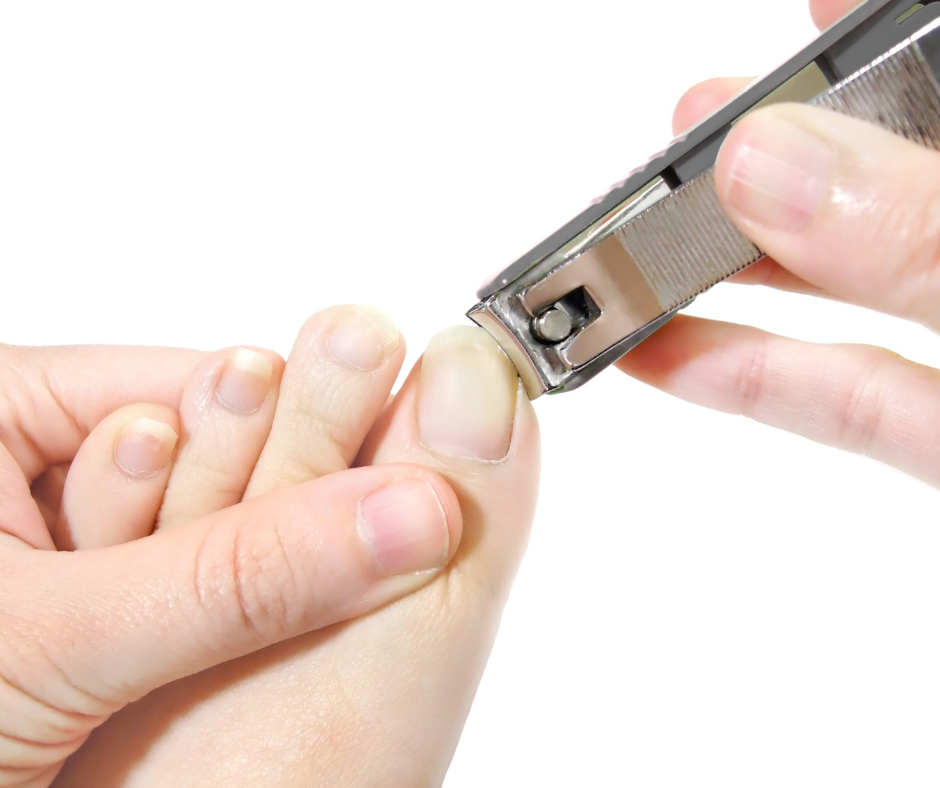
You sit down to trim your toenails and notice something weird… instead of being smooth and polished, some of your toenails have ridges. Before you go down a frantic internet rabbit hole convincing yourself you have a rare disease, take a breath. This is not something we at Goldsmith Podiatry haven’t seen. Ridges on toenails are incredibly common, and most of the time, they are just the body’s way of keeping a diary.
Vertical Ridges
If your toenails have lines running lengthwise, from the cuticle straight up to the free edge, congratulations, you are getting older. These are called longitudinal ridges, and they are essentially the grey hairs of the toenail world.
As we age, the nail matrix starts to have uneven turnover. It loses moisture and natural oils, which results in these harmless vertical striations.
They might be annoying if you are trying to apply nail polish smoothly, but medically, they are usually nothing to worry about. A little buffing and a lot of moisturizer can smooth them out, but they are mostly just a sign of having a few birthdays.
Nutritional Deficiencies
We’ve all heard you are what you eat, and your nails are often the first place to show it when you aren't eating quite right.
The most common offender here is a lack of Vitamin B12 or Iron. The nail matrix needs a steady supply of oxygen and nutrients to lay down smooth keratin. If you are slightly anemic or low on B vitamins, that production line gets glitchy. The result is brittle, ridged nails that break easily.
Psoriasis
Here is a curveball: you can have psoriasis in your nails without having a single patch of it on your skin. We usually think of psoriasis as those itchy, red, scaly patches on elbows and knees, but it loves to attack the nail bed too.
Psoriatic nails have a very specific look. They often develop horizontal ridges or, more famously, pitting. It looks like someone took a tiny ice pick and tapped little dents all over the surface of the nail. The texture can become rough and crumbly, often mimicking a fungal infection.
Toenail Fungus
Speaking of fungal infections, if the ridges are accompanied by thickening, yellow discoloration, or crumbling edges, the culprit is likely just that.
Fungus invades the nail bed, disrupts the smooth growth of the keratin, lifts the nail up, and causes it to grow in distorted, jagged layers.
But don’t worry: our Remy Laser Therapy treatment is effective at stopping toenail fungus in its tracks. Learn about our Onychomycosis treatment with the Remy Laser here.
If you’re looking for more foot care tips, give us a call at (212) 877 1002 so Dr. Howard Goldsmith, Dr. Rosanna Troia, and Dr. Kristina T. Ruff at Goldsmith Podiatry can help guide you in the right direction.